
If you’ve been shopping for epoxy flooring, polyaspartic, or polyurea floors, chances are you’ve heard the debate:
“Which is better — epoxy or polyurea?”
Here’s the thing… the answer isn’t either/or.
The best floors in New England use both.
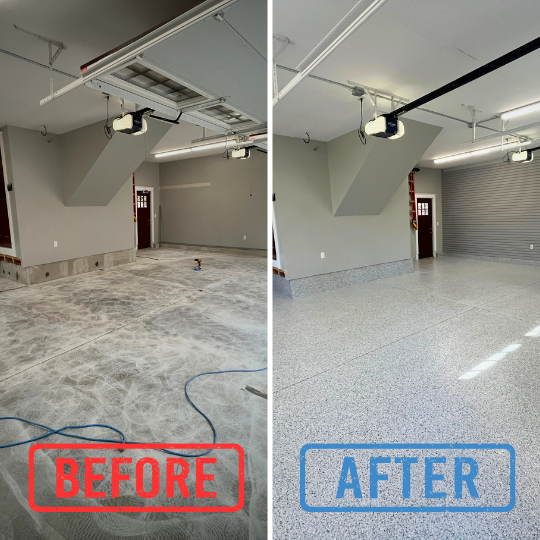
Epoxy vs. Polyurea: The Real Truth
You’ll often hear competitors shout from the rooftops about polyurea’s benefits:
It’s harder.
It cures faster.
It’s UV stable.
And they’re not wrong. Polyurea (and its close cousin, polyaspartic) is an incredible top coat. We use it, too. But here’s the part most companies skip over — those same strengths can become weaknesses in New England if polyurea is used alone.
Why? Because fast cure time means there’s no time for the product to soak deep into the concrete. In a dry desert climate, that might not matter much. But in New England, where moisture vapor pressure builds underneath your slab year-round, it’s a recipe for failure.
That’s why we pair a penetrating epoxy base coat with a polyaspartic top coat. Epoxy’s longer wet time allows it to soak into every pore of the concrete, creating a mechanical bond that’s rock solid. Polyaspartic then locks it in from above, creating a finish that’s both beautiful and bulletproof.
Why 1-Day Garage Floors Are a Risk in New England
New England isn’t Florida.
We’ve got freeze–thaw cycles, snow melt, sand, salt, and serious moisture vapor pressure pushing up through the slab.
Most 1-day garage floors use a single polyurea or polyaspartic coating with a fast cure time. It looks great on day one… but that speed comes at a cost:
No real penetration into the slab — the coating is sitting on top, not bonded in.
Moisture testing is skipped or rushed, leaving hidden issues underneath.
No moisture vapor barrier (MVB) means pressure from below can lift the floor over time.
And when the coating fails in one spot, the damage spreads fast.
This is why we see so many “1-day floors” peeling, bubbling, or delaminating after just a couple of winters.
Moisture Testing: What Most Companies Don’t Do (But We Do)
Concrete isn’t dry — it’s alive. It breathes moisture from below. And in our region, groundwater and weather fluctuations make that pressure even stronger.
Before we ever install a floor, we perform moisture testing on the slab. If the readings are elevated (and here in New England, they usually are), we install a Moisture Vapor Barrier (MVB) as our first coat.
This stops hydrostatic pressure — the force of water vapor pushing upward — from lifting the coating off the floor. Think of it as sealing the foundation from the bottom up.
Skipping this step is like putting a bandage over a leaking pipe. It might look fine for a while, but eventually, it’s going to blow.
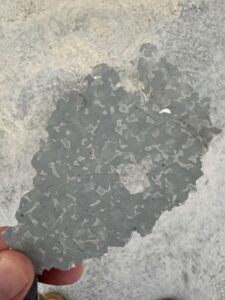
Garage Floor Coatings Gone Wrong
This flooring was only 2-3 years old, as reported by our client in North Hampton, NH. That’s not much longevity for a several thousand dollar investment.
It was peeling up in sections. Normally we have to grind old layers off floors. This one just came up in sections. Nothing really adhered to the slab.
The floor wasn’t prepared properly with grinding, and there was no moisture vapor barrier.
What Some Competitors Call a “3-Coat System” (But Isn’t)
Here’s something most homeowners don’t realize:
Many New England installers claim to offer a “3-coat polyurea system” — but what they’re really giving you is two coats and a layer of decorative vinyl flake.
Their process typically looks like this:
Polyurea base coat
Vinyl flake broadcast
Polyurea top coat
That flake layer isn’t a true coating — it’s not structural, and it doesn’t stop moisture. So in reality, you’re getting two actual coatings of product, not three.
Our True 3-Coat Epoxy & Polyaspartic System
At Seacoast Garage Pros, we don’t cut corners. Our system is built specifically for New England’s moisture, weather, and wear and tear.
Here’s how our true 3-coat system works:
Day 1 — Moisture Vapor Barrier (Epoxy Base Coat)
Penetrates deeply into the concrete thanks to its longer wet time.
Creates a mechanical bond and blocks moisture vapor pressure.
Day 2 — Tinted Epoxy Flake Layer
We apply a tinted layer of epoxy and fully broadcast vinyl flake into it.
This creates a true second coating, not just a decorative sprinkle.
Adds strength, durability, and texture while locking into the base layer.
Day 3 — High-Build Polyaspartic Top Coat
UV stable, chemical resistant, and easy to clean.
Provides a flexible yet strong top layer to protect the floor for years.
This method builds three actual layers of protection — not two.
And that difference matters when the winter salt, moisture, and temperature swings hit your garage.
Epoxy vs. Polyurea vs. Polyaspartic: What’s the Difference?
| ❌ Competitor “3-Coat” System | ✅ Seacoast Garage Pros True 3-Coat System | |
|---|---|---|
| 1st Layer | Polyurea base coat (fast cure, low penetration) | Epoxy Moisture Vapor Barrier – slow cure, deep penetration into slab |
| 2nd Layer | Decorative vinyl flake (not a real coating) | Tinted Epoxy + Full Broadcast Flake – a true structural layer |
| 3rd Layer | Polyurea top coat | Polyaspartic Top Coat – UV stable, chemical resistant, long-lasting |
| Moisture Protection | ❌ None or minimal (most skip proper testing) | ✅ Built-in Moisture Vapor Barrier + moisture testing on every slab |
| Bond Strength | ❌ Surface-level only | ✅ Mechanical bond deep into concrete |
| Durability | ❌ Prone to peeling, bubbling, and lifting over time | ✅ Built to handle New England moisture, salt, and temperature swings |
| What They Call “3-Coat” | 2 real coatings + decorative flake | 3 real coatings designed to protect and last |
The bottom line:
Polyurea and polyaspartic are great — when they’re part of a system built for New England.
Epoxy creates the bond and moisture barrier. Polyaspartic protects it. And the flake layer? It’s real structure, not window dressing.
Why Homeowners Trust Seacoast Garage Pros
We grind every floor to the correct profile for maximum bond.
We test moisture on every slab before installation.
We install MVB when needed — which is most of the time in New England.
We use industrial-grade epoxy and polyaspartic, not box-store kits.
And we back it all up with a real warranty.
Your garage isn’t just another floor. It’s where your cars, your tools, and your investments live. It deserves better than a quick coat and a hope it sticks
The Smart Choice for New England Garages
If you want a garage floor that looks incredible and actually lasts, skip the gimmicks.
Choose a true 3-coat epoxy and polyaspartic system built for New England weather, moisture, and everyday life.
👉 Schedule your free estimate with Seacoast Garage Pros today.
Because your garage deserves better than a one-day floor.